


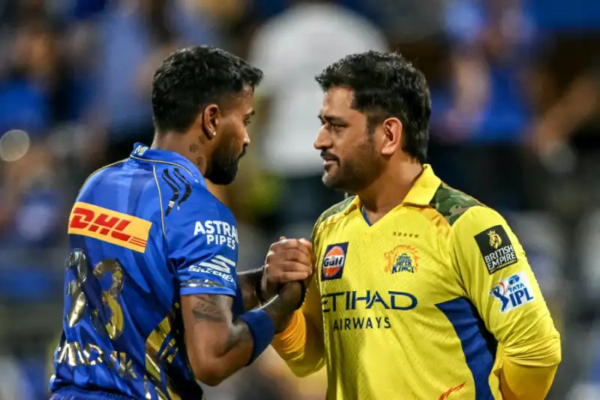
The Indian Premier League has achieved one of the fastest commercial expansions in sporting history. Launched in 2008, the tournament has transformed Twenty20 cricket into a premium entertainment product, attracted institutional investors and established billion-dollar team valuations in less than two decades.
However, claims that the IPL has overtaken the National Football League require qualification. The NFL remains substantially larger by annual revenue, combined franchise value and media-rights income. On a per-match media-rights basis, the IPL ranks second globally, behind the NFL. The remarkable story is therefore not that the IPL has already moved past American football on every measure, but that it has approached the NFL’s premium economics in a fraction of the time.
A Short Format Designed for Modern Audiences
Traditional cricket can last between one and five days, creating obvious challenges for broadcasters and casual spectators. The IPL condensed the experience into matches lasting a few hours, with each contest delivering a clear result, star players and frequent scoring opportunities.
That format fits naturally into evening television schedules and mobile viewing habits. It also gives broadcasters a dependable block of live programming that can be surrounded by previews, highlights, analysis and advertising.
The league’s short season creates scarcity. Rather than spreading hundreds of games across most of the year, the IPL concentrates attention into an intense period in which matches take place almost daily. This makes each fixture commercially important and helps the competition dominate sporting conversation while it is underway.
It is a model that resembles the NFL’s own scarcity strategy. American football teams generally play once per week, turning each game into a major event. The IPL produces more frequent fixtures but achieves a similar sense that every match carries substantial value.
An Enormous Domestic Audience
India provides the IPL with an exceptionally large home market, a rapidly developing digital economy and a deep attachment to cricket. Unlike leagues attempting to build interest across several competing sports, the IPL operates in a country where cricket holds a uniquely powerful cultural position.
That audience gives broadcasters and sponsors access to consumers across different regions, languages and income groups. Television remains important, but affordable smartphones and low-cost mobile data have greatly expanded digital consumption.
The resulting attention is valuable to brands in telecommunications, finance, consumer products, automobiles, food delivery and digital entertainment. The tournament can attract cricket supporters while also reaching audiences interested in celebrity culture, statistics, fantasy competitions, DraftKings football odds and other forms of interactive sports content.
Media Rights Have Become the Commercial Engine
The IPL’s 2023-to-2027 media-rights agreements were valued at approximately ₹48,390 crore, or around $6.2 billion when announced. That works out at roughly $13.4 million per match, placing the competition behind only the NFL on this particular measure. The NFL’s comparable per-game figure is estimated at approximately $37 million.
The value of the IPL’s media rights rose by approximately 196% between cycles. That extraordinary increase reflected competition between television networks and streaming companies seeking exclusive access to live Indian cricket.
Separating television and digital packages also created greater competitive tension. Instead of permitting one company to control every significant channel, the rights structure enabled the league to extract value from traditional broadcasting and online distribution independently.
Franchise Scarcity Has Attracted Major Capital
Only ten IPL franchises compete each season. With no routine promotion or relegation, ownership provides permanent access to central media income, sponsorship opportunities and a scarce sporting asset.
The IPL’s total business value reached an estimated $20.6 billion in 2026, an 11.4% annual increase. Its standalone brand value rose by 10.3% to $4.3 billion, adding more than $1.1 billion since 2023.
Landmark franchise transactions have strengthened that valuation story. Royal Challengers Bengaluru was reportedly acquired for $1.78 billion, while Rajasthan Royals changed ownership at a reported valuation of $1.65 billion. Those transactions established transparent market benchmarks and demonstrated that global institutions increasingly view IPL teams as durable investment assets.
Reported price-to-revenue multiples for recent transactions reached approximately 20 to 22 times revenue. That suggests buyers are paying not only for current earnings but also for anticipated growth in broadcasting, sponsorship and international reach.
International Stars Create a Global Product
The IPL combines leading Indian players with international cricketers in city-based teams. This gives domestic supporters access to elite talent while drawing interest from overseas markets.
Foreign players bring audiences from Australia, England, South Africa, the Caribbean and other cricket nations. The auction system adds another layer of entertainment, producing extensive media coverage before the first ball of the season is bowled.
Player movement also prevents the league from depending entirely on traditional international rivalries. Supporters can follow individual cricketers across different franchises, creating new loyalties and storylines.
Strong Central Control Protects the Product
The Board of Control for Cricket in India controls the central commercial structure, tournament calendar and media-rights process. That coordination helps the IPL present one consistent product to broadcasters and sponsors.
Revenue sharing gives franchises access to central income while allowing them to develop local sponsorship, ticketing, merchandise and licensing businesses. Financial controls and squad rules also limit the extent to which the wealthiest owner can simply purchase every leading player.
The NFL has demonstrated the long-term value of centralised rights, competitive balance and shared revenue. The IPL has successfully adapted many of the same principles to cricket, while adding player auctions, entertainment-led presentation and a compact tournament window.
Has the IPL Really Surpassed the NFL?
Not yet on the broadest financial measures. The NFL generates more than $23 billion in annual revenue, maintains much larger aggregate franchise valuations and earns considerably more per game from media rights.
Where the IPL has moved ahead is in its rate of growth and efficiency relative to its age and season length. It has created a business valued above $20 billion, produced billion-dollar franchises and become the world’s second-most valuable sporting competition per match in only 18 years.
That achievement explains the excitement around its future. The IPL has not displaced the NFL as global sport’s financial leader, but it has built the closest new challenger by combining scarcity, digital reach, centralised commercial control and unmatched access to India’s cricket audience.