


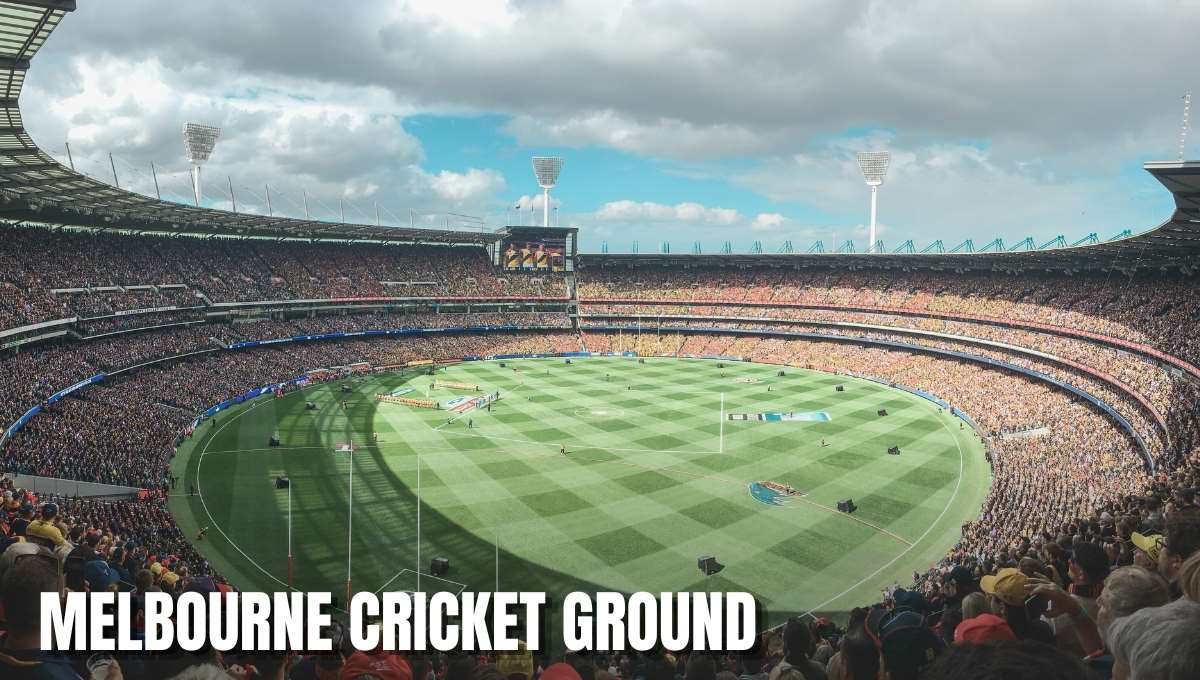
The Melbourne Cricket Ground (MCG) is one of the most famous cricket stadiums in the world. Located in Melbourne, Victoria, Australia, it is among the oldest and largest cricket grounds and was established in 1853. The MCG is particularly famous for hosting the annual Boxing Day Test, which begins on 26 December.
The Melbourne Cricket Ground offers a balanced contest between batters and bowlers. Its pitch generally provides good bounce and carry, allowing batters to score runs once they adjust to the conditions. Fast bowlers can also benefit from the pace and bounce, while the large boundaries make clearing the ropes more challenging than at smaller cricket venues.
Melbourne Cricket Ground Overview
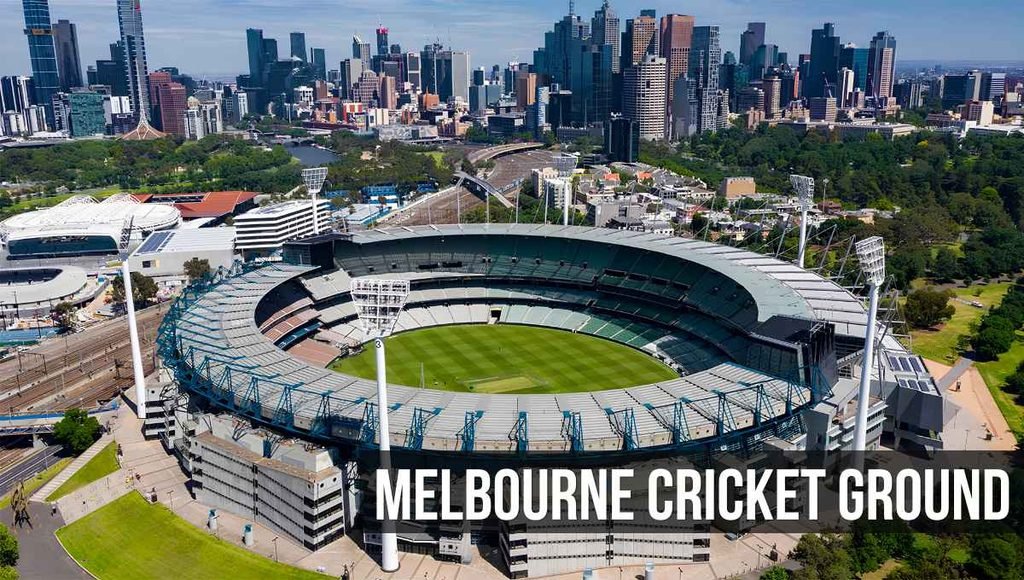
The Melbourne Cricket Ground was established in 1853 and has played a significant role in Australian cricket history. It hosted Australia’s first Test match against England in March 1877, marking a historic occasion in international cricket. The stadium also hosted the first men’s ODI between Australia and England in January 1971. Over the years, the MCG has welcomed men’s and women’s international matches, Big Bash League fixtures and major ICC tournaments.
The MCG has a seating capacity of approximately 100,024 spectators. It is managed by the Melbourne Cricket Club and serves as the home ground for Victoria and the Melbourne Stars in the Big Bash League.
| Details | Information |
|---|---|
| Stadium Name | Melbourne Cricket Ground |
| Popular Name | MCG |
| Location | Yarra Park, Melbourne, Victoria, Australia |
| Established | 1853 |
| Opened | 1853 |
| Owned/Managed By | Melbourne Cricket Club |
| Capacity | Approximately 100,024 |
| Country | Australia |
| Domestic Home Team | Victoria |
| BBL Home Team | Melbourne Stars |
| International Home Team | Australia |
| Floodlights | Yes |
| First Test Match | Australia vs England, 15 March 1877 |
| First ODI | Australia vs England, 5 January 1971 |
| First Men’s T20I | Australia vs India, 1 February 2008 |
| Test Matches Hosted | More than 115 |
| ODI Matches Hosted | More than 150 |
| Men’s T20I Matches Hosted | More than 20 |
| Main Use | International cricket and other sporting events |
| Pitch Surface | Drop-in pitch |
| IPL Matches | Not hosted |
| Main Ends | Members End and Great Southern Stand End |
| City / State | Melbourne, Victoria |
History of Melbourne Cricket Ground
The Melbourne Cricket Ground has existed since 1853. Initially established as a cricket venue, it gradually became one of the most important sporting grounds in Australia. The first-ever Test match in cricket history was played between Australia and England at the MCG from 15 to 19 March 1877. Australia won the historic match by 45 runs, while Charles Bannerman scored the first Test century for Australia.
In January 1971, the stadium hosted another historic contest when Australia faced England in the first men’s ODI. This match marked the beginning of a new era in international cricket. The MCG also hosted the 1992 Cricket World Cup final between Pakistan and England. Under Imran Khan’s captaincy, Pakistan defeated England by 22 runs to win its maiden men’s ODI World Cup title.
The stadium hosted another memorable World Cup final in 2015 when Australia defeated New Zealand by seven wickets to secure its fifth men’s ODI World Cup title. The MCG is also renowned for its Boxing Day Test tradition. The annual Test match begins on 26 December and attracts thousands of cricket supporters.
Australia scored a mammoth 624/8 declared against Pakistan in a Test match at the MCG in December 2016. It remains one of the most memorable batting performances at the venue.
Melbourne Cricket Ground Pitch Report
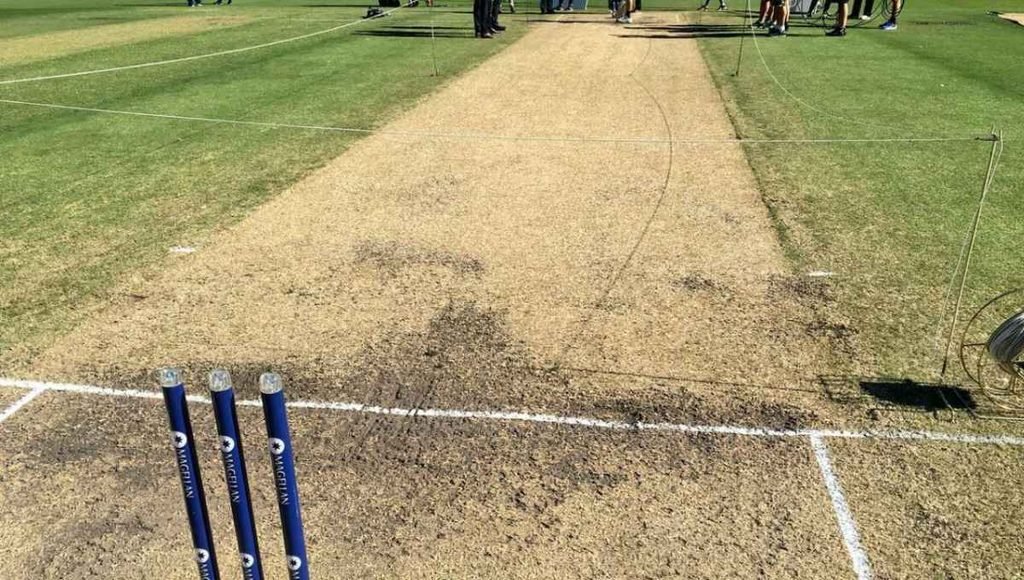
The Melbourne Cricket Ground pitch generally offers a balanced contest between batters and bowlers. The surface provides good bounce and carry, allowing batters to play their shots once they settle at the crease. Fast bowlers can benefit from pace and seam movement, particularly during the early overs and under cloudy conditions. Spinners may find assistance as the pitch wears during longer matches. In T20 cricket, the large boundaries make timing and shot placement important for scoring quickly. Overall, the MCG is considered a balanced venue, with actual conditions depending on pitch preparation, weather and match format.
Melbourne Cricket Ground Weather
Melbourne has an oceanic climate with fluctuating temperatures, occasional rainfall and variable wind conditions. Weather can influence cricket matches at the MCG, particularly during Test and limited-overs fixtures.
- Unpredictable weather: Rain and cloud cover can interrupt matches and change playing conditions. Overcast skies may also help swing bowlers.
- Seam movement: The MCG surface can provide good bounce and carry. Fast bowlers may extract additional movement when the pitch has sufficient grass.
- Possible dew: Evening matches can experience dew depending on the season and weather. A wet outfield may affect bowling grip and fielding.
- Temperature: Melbourne’s summer afternoons can be warm, while evenings may become cooler. Players need to adjust their strategies according to temperature changes.
- Wind conditions: Strong winds can influence aerial shots and bowling lines. Batters may find it challenging to clear the larger boundaries when hitting against the wind.
Average Score at Melbourne Cricket Ground
The average score at the Melbourne Cricket Ground varies across formats. Test matches generally produce larger innings totals because teams have more time to build their scores. In limited-overs cricket, the pitch, weather conditions and batting strategies influence the final total.
| Format | Average 1st Innings Score | Average 2nd Innings Score |
|---|---|---|
| Test | Around 309 | Around 312 |
| ODI | Around 223 | Around 197 |
| Men’s T20I | Around 144 | Around 132 |
| Domestic T20 (BBL) | Around 157 | Around 144 |
| Women’s T20I | Around 145 | Around 135 |
| IPL | Not Available | Not Available |
T20I Records at MCG
The Melbourne Cricket Ground has hosted several men’s T20I matches involving Australia and other international teams. The venue has witnessed competitive contests, impressive batting performances, and memorable bowling spells.
| Record | Performance |
|---|---|
| Men’s T20I Matches | 20 (historical statistical dataset) |
| Highest Total | 186/5 – India vs Zimbabwe, 2022 |
| Lowest All-Out Total | 74 – India vs Australia, 2008 |
| Highest Individual Score | 90 – Aaron Finch vs England, 2013 |
| Best Bowling Figures | 4/21 – Adam Zampa vs Sri Lanka, 2019 |
| Highest Successful Chase | 172/5 – Australia vs Pakistan, 2019 |
| Lowest Match Total | 74 – India vs Australia, 2008 |
Highest Score at MCG
The Melbourne Cricket Ground has witnessed several outstanding batting performances across international and domestic cricket formats. Australia has recorded some of the venue’s biggest totals, while visiting teams have also produced memorable innings.
| Format | Highest Score | Team |
|---|---|---|
| Test | 624/8 declared | Australia vs Pakistan, 2016 |
| ODI | 355/5 | Australia vs England, 2022 |
| Men’s T20I | 186/5 | India vs Zimbabwe, 2022 |
| Domestic T20 (BBL) | 273/2 | Melbourne Stars vs Hobart Hurricanes, 2022 |
| Women’s T20I | 184 | Australia Women |
| IPL | Not Available | — |
Lowest Score at MCG
Despite its reputation for offering good batting conditions in certain matches, the MCG has also witnessed some difficult batting performances. Fast bowlers have exploited the bounce and movement to put batting teams under pressure.
| Format | Lowest Score | Team |
|---|---|---|
| Test | 36 all out | South Africa vs Australia, 1932 |
| ODI | 94 all out | England vs Australia, 1979 |
| Men’s T20I | 74 all out | India vs Australia, 2008 |
| Domestic T20 (BBL) | 68 all out | Adelaide Strikers vs Melbourne Stars, 2021 |
| IPL | Not Available | — |
Chasing Record at Melbourne Cricket Ground
The MCG has produced several successful run chases in international cricket. Teams batting second have achieved notable victories in limited-overs matches, although the outcome depends on the target, pitch conditions and weather.
| Chase Record | Score / Details |
|---|---|
| Highest Successful Test Chase | 332/7 – Australia vs Pakistan, 2016 |
| Highest Successful ODI Chase | 308/2 – England vs Australia, 2018 |
| Highest Successful Men’s T20I Chase | 172/5 – Australia vs Pakistan, 2019 |
| Highest Successful Domestic T20 Chase | 273/2 – Melbourne Stars vs Hobart Hurricanes, 2022 |
Good Score at Melbourne Cricket Ground
A competitive total at the Melbourne Cricket Ground depends on the format, pitch preparation and playing conditions. The large boundaries make it important for batters to combine power-hitting with effective strike rotation.
| Format | Competitive Score | Strong Score |
|---|---|---|
| Test (First Innings) | 300–350 | 400+ |
| Men’s T20I | 150–165 | 180+ |
| Domestic T20 (BBL) | 155–175 | 190+ |
| ODI | 260–280 | 310+ |
Recent International Records
The Melbourne Cricket Ground regularly hosts important international cricket matches, including Boxing Day Tests, bilateral series and ICC tournaments.
| Date | Match | Key Performance | Result |
|---|---|---|---|
| 26 Dec 2025 | Australia vs England (Test) | England chased 175/6 in the fourth innings | England won by 4 wickets |
| 31 Oct 2025 | India vs Australia (T20I) | Australia defeated India | Australia won by 4 wickets |
| 26 Dec 2024 | Australia vs India (Test) | Australia scored 474 in the first innings | Australia won by 184 runs |
| 22 Nov 2022 | Australia vs England (ODI) | Australia scored 355/5 | Australia won by 221 runs |
| 6 Nov 2022 | India vs Zimbabwe (T20I) | India scored 186/5 | India won by 71 runs |
| 29 Mar 2015 | Australia vs New Zealand (World Cup Final) | Australia chased 183 | Australia won by 7 wickets |
ODI Records at Melbourne Cricket Ground
The Melbourne Cricket Ground has hosted more than 150 men’s ODI matches. Its history includes World Cup fixtures, bilateral series and several memorable individual performances.
| Record | Details |
|---|---|
| ODI Matches | More than 150 |
| First ODI | Australia vs England, 1971 |
| Highest Team Total | 355/5 – Australia vs England, 2022 |
| Lowest Team Total | 94 – England vs Australia, 1979 |
| Highest Successful Chase | 308/2 – England vs Australia, 2018 |
| Highest Individual Score | 180 – Jason Roy vs Australia, 2018 |
| Best Bowling Figures | 6/42 – Ajit Agarkar, 2004 and Yuzvendra Chahal, 2019 |
| Most ODI Runs | Ricky Ponting |
| Most ODI Wickets | Shane Warne |
Test Records
The Melbourne Cricket Ground is one of the most historic Test cricket venues in the world. It has hosted several memorable Ashes contests and important matches involving Australia and visiting international teams.
| Record | Details |
|---|---|
| Test Matches | More than 115 |
| First Test | Australia vs England, March 1877 |
| Highest Team Total | 624/8 declared – Australia vs Pakistan, 2016 |
| Lowest Team Total | 36 – South Africa vs Australia, 1932 |
| Highest Individual Score | 307 – Bob Cowper vs England, 1966 |
| Best Bowling Figures | 10/86 – Jim Laker vs Australia, 1956 |
| Highest Successful Chase | 332/7 – Australia vs Pakistan, 2016 |
| Traditional Match | Boxing Day Test |
The first Test match at the MCG remains an important milestone in cricket history. Australia defeated England by 45 runs in the inaugural international Test encounter.
Nearest Places to Melbourne Cricket Ground
The Melbourne Cricket Ground is situated in Yarra Park, close to Melbourne’s central business district. Its location provides convenient access to several popular attractions, railway stations and public transport facilities.
| Nearest Place | Approximate Distance |
|---|---|
| Jolimont Railway Station | 500 metres |
| Richmond Railway Station | 1–1.5 km |
| Federation Square | 1–1.5 km |
| Melbourne CBD | 1–2 km |
| National Gallery of Victoria | 2 km |
| Flinders Street Railway Station | 1.5–2 km |
| Melbourne Museum | 3–4 km |
| Melbourne Airport | 23–25 km |
How to Reach Melbourne Cricket Ground
The MCG has excellent transport connectivity because of its central location in Melbourne. Visitors can use trains, trams, buses, taxis and private vehicles to reach the stadium.
| Transport Mode | How to Reach |
|---|---|
| By Air | Arrive at Melbourne Airport and take a taxi, airport bus, or public transport towards the city. |
| By Train | Get off at Jolimont or Richmond Railway Station and walk towards the stadium. |
| By Tram | Use tram services connecting Melbourne CBD with the MCG area. |
| By Bus | Take a local bus towards central Melbourne and continue by tram or walking. |
| By Road | Reach Yarra Park via major roads connecting to Melbourne CBD. |
| By Taxi | Book a local taxi or rideshare service directly to the stadium. |
Melbourne Cricket Ground Boundary Length
The Melbourne Cricket Ground is famous for its large playing area and relatively long boundaries. The approximate straight boundary measures around 80 metres, while the square boundaries can extend to approximately 85 metres. Actual measurements vary depending on the pitch and boundary rope placement.
| Boundary | Approximate Length |
|---|---|
| Square Boundary | 85 metres |
| Straight Boundary | 80 metres |
| Long-Off | 80–85 metres |
| Long-On | 80–85 metres |
| Fine Leg | 65–70 metres |
| Third Man | 65–70 metres |
Conclusion
The Melbourne Cricket Ground is one of the most iconic cricket stadiums in the world. Established in 1853, it has hosted several historic international matches, including the first-ever Test match and the first men’s ODI. The venue is also famous for its World Cup finals, major international fixtures, and traditional Boxing Day Test.
The MCG pitch generally offers a competitive contest between batters and bowlers. Good bounce and carry can help batters score runs, while seam movement and pace can create opportunities for fast bowlers. The large boundaries make six-hitting more challenging and encourage players to focus on shot placement and running between the wickets.
The stadium’s rich history, massive seating capacity and memorable international performances make it an important destination for cricket supporters. Ultimately, the pitch, weather and boundary dimensions all influence how a match unfolds at this historic venue.
FAQs
A1. The Melbourne Cricket Ground is located in Yarra Park, Melbourne, Victoria, Australia. It is one of the largest and most famous cricket stadiums in the world.
A2. The highest ODI team score at the MCG was 355/5, recorded by Australia against England on 22 November 2022.
A3. The lowest completed men’s T20I total in the historical dataset was 74 all out, recorded by India against Australia in 2008.
A4. The MCG generally offers a balanced pitch with good bounce and carry. Batters can play their shots once they settle, while fast bowlers can find assistance through pace and seam movement.
A5. The average first-innings score in men’s T20I matches at the MCG is approximately 144 runs, based on the historical statistical dataset used in this article.
Also Read: Riverside Ground: Overview, Pitch Report, Weather, Records, Boundary Length and History

 is one of the most famous cricket stadiums in the world, it is located in Melbourne, Victoria, Australia.)