



Pallekele International Cricket Stadium is one of Sri Lanka’s important international cricket venues. It stands in Pallekele, near Kandy, and hosts Test matches, One Day Internationals (ODIs) and T20 Internationals (T20Is). The stadium was established in 2009 and became an international cricket venue in 2010. It also hosted matches during the 2011 ICC Cricket World Cup. Over the years, the ground has witnessed several memorable performances and high-scoring games.
Overview of Pallekele International Cricket Stadium
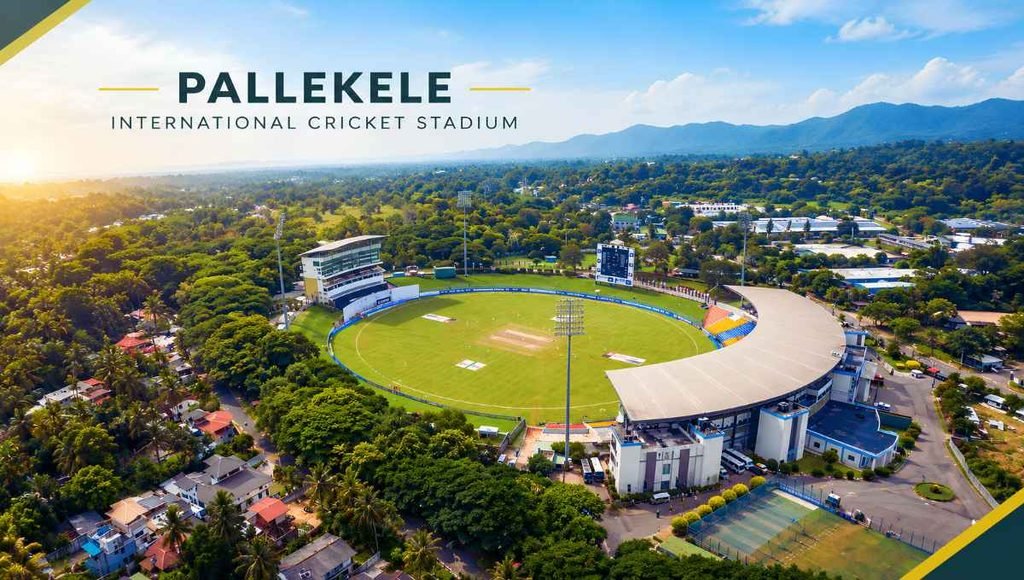
Here are the key details about the stadium:
| Feature | Details |
|---|---|
| Stadium name | Pallekele International Cricket Stadium |
| Location | Pallekele, near Kandy, Sri Lanka |
| Established | 2009 |
| Capacity | Approximately 35,000 |
| First Test match | Sri Lanka vs West Indies, December 2010 |
| First ODI | New Zealand vs Pakistan, March 2011 |
| First T20I | Sri Lanka vs Australia, August 2011 |
| Ends | Hunnasgiriya End and Rikillagaskada End |
| Floodlights | Available |
These details make Pallekele an important venue for international cricket in Sri Lanka.
History of Pallekele International Cricket Stadium
Pallekele International Cricket Stadium was developed to expand Sri Lanka’s facilities for international cricket. The venue became particularly important during preparations for the 2011 Cricket World Cup. Sri Lanka played its first Test match at the ground against West Indies in December 2010. Later, the stadium hosted its first ODI between New Zealand and Pakistan on March 8, 2011. It also welcomed its first T20I when Sri Lanka faced Australia on August 6, 2011.
Since then, the ground has hosted international teams in all three formats. It has also staged matches featuring memorable batting displays and impressive bowling performances. Today, Pallekele remains an important cricket venue because of its international history and its role in Sri Lankan cricket.
Pallekele International Cricket Stadium Pitch Report
The pitch at Pallekele can support both batters and bowlers. However, its behaviour depends on the surface preparation, weather, and match format. In limited-overs cricket, batters can score quickly when they settle at the crease. The venue has produced several large totals, which shows that teams can make good use of favourable batting conditions. Bowlers can also find opportunities. Seamers may benefit from movement under suitable conditions, particularly when the weather is cloudy, or the pitch retains moisture. Meanwhile, spinners can become important as a match progresses, depending on the surface. For this reason, teams should assess the pitch before choosing their playing XI and match strategy. The toss can also influence decisions, especially when rain or dew may affect conditions.
Is Pallekele a Batting or Bowling Pitch?
Pallekele is not exclusively a batting or bowling pitch. Instead, the ground has produced both high-scoring matches and low team totals. For example, Sri Lanka scored 381/3 against Afghanistan in an ODI at this venue. In T20I cricket, Australia recorded 263/3 against Sri Lanka in 2016. However, New Zealand were dismissed for 88 against Sri Lanka in a T20I.
These results show that conditions and team performance can make a major difference. Batters may enjoy the surface when they build partnerships and maintain a good scoring rate. On the other hand, bowlers can put pressure on the batting side through accurate lines, variations, and timely wickets.
Therefore, check the latest pitch report before making a match prediction. Historical records provide useful context, but they cannot guarantee the same conditions in every game.
Factors That Affect the Pitch
Several factors can influence how the Pallekele pitch behaves during a match.
- Weather conditions: Cloud cover, humidity and rain can influence the amount of assistance available to seam bowlers.
- Pitch preparation: The curator’s preparation and the amount of grass on the surface can affect bounce and movement.
- Match format: Test matches, ODIs and T20Is place different demands on the pitch.
- Surface wear: The pitch may change as a match progresses, particularly during longer games.
- Dew and moisture: Evening conditions can influence grip and ball handling, depending on the weather.
As a result, teams should consider these factors together rather than relying on the venue’s reputation alone.
Pallekele International Cricket Stadium Weather
Pallekele, near Kandy in Sri Lanka, generally experiences warm and humid conditions. The region also receives seasonal rainfall, which can affect cricket matches at different times of the year. Weather plays an important role in match planning. For example, cloudy conditions and moisture may help seam bowlers, while rain can interrupt play and reduce the number of overs. Humidity and evening conditions may also influence how players handle the ball.
However, the weather does not affect every match in the same way. Pitch preparation, the timing of rainfall and the conditions during play can all change the impact. For match-day analysis, check the latest forecast for Pallekele. Pay particular attention to the chance of rain, temperature, humidity and expected wind conditions. If rain interrupts a limited-overs match, officials may use the Duckworth–Lewis–Stern (DLS) method to calculate a revised target.
Average Score at Pallekele International Cricket Stadium
Average scores help readers understand the scoring pattern at a cricket venue. At Pallekele, the averages differ across Test, ODI and T20I matches. The following figures are reported venue averages. They can change as more matches take place.
| Match format | Average first-innings score | Average second-innings score |
|---|---|---|
| Test | 323 | 317 |
| ODI | 245 | 204 |
| T20I | 167 | 146 |
In Test cricket, teams have recorded strong scores across the first two innings. In ODIs, the average second-innings score is lower than the first-innings average. T20I figures also show a difference between the two innings.
However, averages do not tell the whole story. A team’s batting strength, bowling attack, weather and match situation can all influence the final score.
Test Records at Pallekele International Cricket Stadium
Pallekele has hosted several memorable Test matches since 2010. The venue has produced substantial team totals, while bowlers have also achieved important breakthroughs.
The following table lists selected Test records reported by venue statistics sources.
| Record | Details |
|---|---|
| Highest team total | 648/8 declared – Sri Lanka vs Bangladesh |
| Lowest team total | 117 – Sri Lanka vs Australia |
| Highest successful chase listed | 382/3 – Pakistan vs Sri Lanka |
| Average first-innings score | 323 |
| Average second-innings score | 317 |
| Average third-innings score | 273 |
| Average fourth-innings score | 241 |
Sri Lanka’s 648/8 declared against Bangladesh stands out as a major team performance at the ground. The venue has also witnessed challenging batting conditions, as the lowest recorded total demonstrates. These records offer a useful starting point for understanding Test cricket at Pallekele. Nevertheless, current statistics should be checked before publication because new matches can change the record list.
ODI Records at Pallekele International Cricket Stadium
Pallekele has hosted many One Day International matches involving Sri Lanka and visiting teams. Its ODI history includes high totals, successful chases and low team scores.
Here are some selected ODI records:
| Record | Details |
|---|---|
| Highest team total | 381/3 – Sri Lanka vs Afghanistan |
| Lowest team total | 70 – Zimbabwe vs Sri Lanka |
| Highest successful chase listed | 314/6 – Sri Lanka vs Afghanistan |
| Average first-innings score | 245 |
| Average second-innings score | 204 |
| Matches won batting first | 18 |
| Matches won bowling first | 27 |
Sri Lanka’s 381/3 against Afghanistan demonstrates the scoring potential of the ground. In contrast, Zimbabwe’s total of 70 shows how quickly a batting innings can collapse under pressure.
The listed results also show that teams have won more matches while bowling first than while batting first in this historical dataset. However, these figures do not guarantee that chasing will always be the better option. Captains should assess the pitch, weather and team strengths before making their decision.
T20I Records at Pallekele International Cricket Stadium
Pallekele has produced some notable performances in T20 International cricket. The format allows batters to attack from the start, although bowlers can change the game through wickets and variations.
The following table summarises selected T20I records reported in the venue statistics.
| Record | Details |
|---|---|
| Highest team total | 263/3 – Australia vs Sri Lanka |
| Lowest team total | 88 – New Zealand vs Sri Lanka |
| Highest successful chase listed | 184/2 – Sri Lanka vs Australia |
| Average first-innings score | 167 |
| Average second-innings score | 146 |
| Matches won batting first | 18 |
| Matches won bowling first | 15 |
Australia produced the venue’s famous T20I total of 263/3 against Sri Lanka on September 6, 2016. Glenn Maxwell played a major role in that innings, scoring an unbeaten 145 from just 65 balls. At the other end of the scoring range, New Zealand were dismissed for 88 against Sri Lanka. This contrast highlights the impact of batting execution and bowling pressure in T20 cricket.
These statistics are useful when comparing teams and assessing possible scores. Still, readers should verify the latest record list before using the figures in match previews.
Boundary Dimensions of Pallekele International Cricket Stadium
Boundary dimensions can influence shot selection and scoring patterns in cricket. However, reliable published sources do not always provide the exact rope distances for every side of the ground. ESPNcricinfo lists the playing area at Pallekele as approximately 80 metres long and 75 metres wide. These measurements describe the playing area, so they should not be presented as confirmed straight and square boundary distances.
Actual boundary lengths may vary according to the pitch in use and the placement of the boundary rope for a particular match. Therefore, check the official match broadcast or venue information for exact boundary measurements when those figures are necessary. For general analysis, the playing-area measurements offer context, but they do not replace confirmed boundary distances.
Recent Matches at Pallekele International Cricket Stadium
Recent matches provide useful context for understanding how teams have performed at Pallekele. Results can also demonstrate how weather, batting conditions and bowling performances influence a game.
T20 World Cup 2026 (England vs Sri Lanka)
Sri Lanka faced England in a Super Eight match of the 2026 ICC Men’s T20 World Cup at Pallekele. England scored 146/9, while Sri Lanka were dismissed for 95 in 16.4 overs. England won the match by 51 runs. Will Jacks played a key role in the victory and earned the Player of the Match award. The result showed how an effective bowling performance can defend a modest total and put pressure on the chasing team.
Sri Lanka vs England: First T20I, January 30, 2026
England faced Sri Lanka in the first T20I of England’s tour of Sri Lanka. Sri Lanka scored 133 before losing all their wickets in 16.2 overs. Rain affected the match, and England received a revised target under the DLS method. England reached 125/4 in 15 overs and won by 11 runs under the revised calculation.
Adil Rashid earned the Player of the Match award after taking three wickets for 19 runs. Sam Curran also made headlines by taking a hat-trick. These matches illustrate why readers should consider the score, weather interruptions and bowling performance when analysing results at Pallekele.
Pallekele International Cricket Stadium and the 2011 Cricket World Cup
Pallekele International Cricket Stadium played a role in the 2011 ICC Cricket World Cup, which Sri Lanka co-hosted with India and Bangladesh. The tournament helped establish the venue as an important location for international cricket. It gave the stadium an opportunity to host visiting teams and welcome supporters from different countries.
Since the World Cup, Pallekele has continued to host international matches across different formats. Its facilities, floodlights and international match history have helped maintain its place in Sri Lankan cricket. The tournament remains an important part of the stadium’s history and has contributed to its recognition among cricket fans.
Conclusion
Pallekele International Cricket Stadium is an important venue in Sri Lankan cricket. Since its establishment, it has hosted Test matches, ODIs, T20Is and games during the 2011 Cricket World Cup. The ground has produced high team totals, successful chases and memorable individual performances. At the same time, its records show that batting success depends on more than the venue alone. Pitch conditions, weather, team strength and match strategy can all influence the result.
For a better understanding of an upcoming match, review the latest pitch report, average scores, team records, and weather forecast. Also, check updated statistics before relying on historical records, as new matches may change them. By considering these factors together, readers can develop a more balanced view of Pallekele International Cricket Stadium and its playing conditions.
Frequently Asked Questions (FAQs)
A1. Pallekele International Cricket Stadium is located in Pallekele, near Kandy, in Sri Lanka.
A2. Cricbuzz and ESPNcricinfo list the stadium’s capacity at approximately 35,000 spectators.
A3. Pallekele has produced high scores as well as low team totals. Therefore, the pitch can support batting, but actual conditions depend on the surface, weather, and match situation.
A4. The cited venue statistics list the average first-innings T20I score as 167, and the average second-innings score as 146. These figures may change as more matches take place.
A5. The cited venue statistics list Australia’s 263/3 against Sri Lanka as the highest T20I team total at the ground. Glenn Maxwell scored an unbeaten 145 in that match.
A6. ESPNcricinfo lists the playing area as approximately 80 metres long and 75 metres wide. These figures are not confirmed straight-and-square boundary distances


 is located in Kandy, Sri Lanka.)